How to Measure and Maximize Marketing Automation ROI
Learn how to calculate marketing automation ROI, track the right metrics, and implement proven strategies to maximize your return on investment.
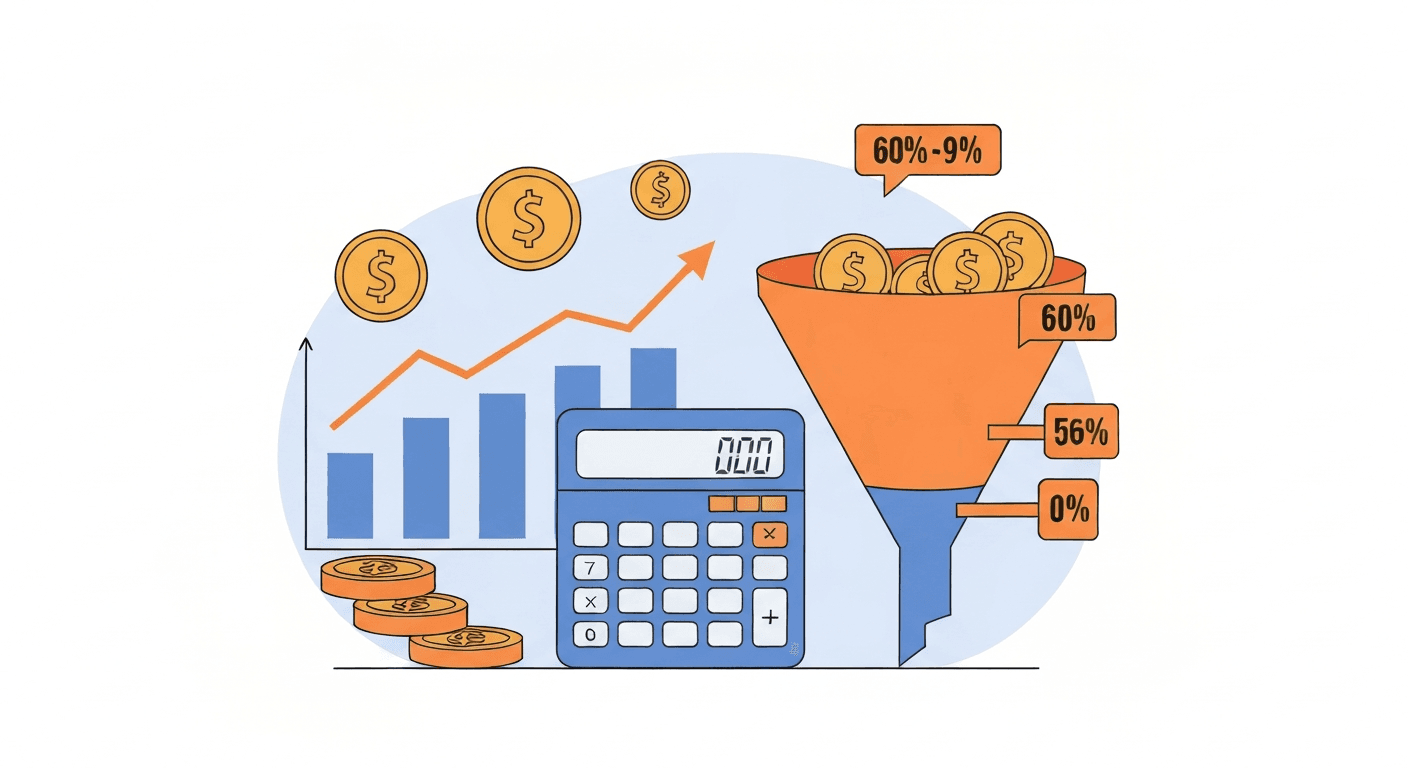
Investing in marketing automation is one thing. Proving that the investment pays off is something else entirely. Too many businesses deploy automation platforms, build a handful of workflows, and then struggle to connect those efforts to actual revenue. The truth is that marketing automation ROI is highly measurable, but only if you know what to track and how to calculate it.
This guide walks you through the complete process of measuring, analyzing, and maximizing the return on your marketing automation investment so you can justify your spend and scale what works.
What Is Marketing Automation ROI?
Marketing automation ROI is the ratio of the financial gains generated by your automation efforts compared to the total cost of implementing and maintaining those systems. It accounts for everything from software licensing fees and implementation costs to the revenue generated by automated campaigns, reduced labor expenses, and increased conversion rates.
Unlike simple campaign metrics such as open rates or click-through rates, ROI connects your automation activities directly to business outcomes. It answers the fundamental question every executive asks: "Is this investment making us money?"
The basic formula is straightforward:
ROI = (Revenue Attributed to Automation - Total Cost of Automation) / Total Cost of Automation x 100
If you spend $30,000 per year on your marketing automation platform and the campaigns it powers generate $150,000 in attributable revenue, your ROI is 400 percent. However, reaching that number requires careful tracking and honest attribution, which is where most organizations stumble.
How Do You Calculate the True Cost of Marketing Automation?
Before you can measure ROI, you need an accurate picture of your total investment. Many businesses undercount costs by focusing only on the software subscription. A comprehensive cost assessment includes several categories.
Software and Licensing Fees
This is the most obvious cost. It includes your monthly or annual subscription to the automation platform, any add-on modules you purchase, and fees for additional contacts or users beyond your base plan. Platforms like HubSpot, ActiveCampaign, Marketo, and Pardot all have different pricing structures, so make sure you account for every line item on your invoice.
Implementation and Onboarding
Setting up a marketing automation platform takes time and often requires outside help. Factor in costs for initial configuration, CRM integration, data migration, template design, and workflow creation. If you hired a consultant or agency to assist with implementation, include those fees as well.
Ongoing Labor Costs
Someone on your team manages the platform day to day. Whether that is a full-time marketing operations specialist or a portion of a marketing manager's time, the labor cost of operating and optimizing your automation system is a real expense. Calculate this by estimating the percentage of each person's salary that goes toward automation-related work.
Training and Education
Your team needs to learn the platform and stay current as features evolve. Include costs for training courses, certifications, conference attendance, and the productivity lost during onboarding periods.
Content Creation
Automated workflows require content to deliver. Email copy, landing pages, lead magnets, nurture sequences, and social media assets all need to be created and maintained. If you outsource content production, these costs are easy to track. If your in-house team handles it, estimate the time and salary allocation.
Adding all of these components together gives you the true total cost of ownership for your marketing automation investment.
What Metrics Should You Track to Measure ROI?
Effective ROI measurement depends on tracking the right metrics across the entire customer journey. Here are the most important ones to monitor.
Revenue Attribution
The most critical metric is revenue directly attributed to automated campaigns. This requires connecting your automation platform to your CRM so you can trace closed deals back to the marketing touches that influenced them. Multi-touch attribution models work best here because they distribute credit across every interaction a prospect had before converting, rather than giving all the credit to the first or last touch.
Customer Acquisition Cost
Customer acquisition cost (CAC) measures how much you spend to acquire each new customer. Compare your CAC before and after implementing automation. A well-optimized automation system should reduce CAC by streamlining lead nurturing, improving targeting, and eliminating wasted spend on unqualified prospects.
Lead-to-Customer Conversion Rate
Track the percentage of leads that eventually become paying customers. Automated lead scoring and nurture sequences should improve this rate over time by ensuring that prospects receive relevant content at the right moment in their buying journey.
Customer Lifetime Value
Customer lifetime value (CLV) measures the total revenue a customer generates over the entire relationship. Automation can increase CLV through onboarding sequences, upsell and cross-sell campaigns, loyalty programs, and retention workflows. Tracking CLV alongside acquisition cost gives you a complete picture of long-term profitability.
Time Savings and Operational Efficiency
Quantify the hours saved by automating manual tasks. If your team previously spent ten hours per week on manual email sends, list segmentation, and reporting, and automation reduces that to two hours, the eight-hour difference has a measurable dollar value based on employee compensation rates.
Pipeline Velocity
Pipeline velocity measures how quickly leads move through your sales funnel from first touch to closed deal. Faster pipeline velocity means shorter sales cycles, which means revenue arrives sooner. Automated nurturing and timely follow-ups are primary drivers of velocity improvement.
How Do You Set Up Proper Attribution for Automation ROI?
Attribution is the bridge between marketing activity and revenue, and getting it right is essential for accurate ROI calculation.
Choose an Attribution Model
There are several common models to consider:
- First-touch attribution gives all credit to the first interaction a lead had with your brand. This is useful for understanding which channels drive awareness.
- Last-touch attribution gives all credit to the final interaction before conversion. This highlights what closes deals but ignores everything that came before.
- Linear attribution distributes credit equally across every touchpoint. This provides a balanced view but may overvalue low-impact interactions.
- Time-decay attribution gives more credit to interactions that occurred closer to the conversion. This often reflects reality well for longer sales cycles.
- Position-based attribution gives the most credit to the first and last touches with the remaining credit spread across middle interactions.
For most organizations, time-decay or position-based models provide the most accurate picture of how automation contributes to revenue.
Connect Your Systems
Attribution requires seamless data flow between your marketing automation platform, CRM, and analytics tools. Make sure your CRM integration is properly configured so that every marketing touch is recorded on the contact record and visible to both marketing and sales teams.
Tag and Track Everything
Use UTM parameters on every link in your automated campaigns. Create unique tracking codes for each workflow, email sequence, and landing page. The more granular your tracking, the more accurately you can attribute revenue to specific automation efforts.
What Strategies Maximize Marketing Automation ROI?
Measuring ROI is only half the equation. The other half is actively working to improve it. Here are proven strategies that drive higher returns from your automation investment.
Segment Your Audience Aggressively
Generic, one-size-fits-all campaigns generate mediocre results. Granular segmentation allows you to deliver highly relevant content to specific audience groups based on their behavior, demographics, industry, purchase history, and engagement level. The more targeted your automated messages, the higher your conversion rates and the stronger your ROI.
Optimize Your Lead Scoring Model Continuously
Your lead scoring model should not be a set-it-and-forget-it system. Review your scoring criteria quarterly by analyzing which scored leads actually converted and which did not. Adjust point values, add new behavioral signals, and remove criteria that no longer predict conversion. A well-tuned scoring model ensures that your sales team focuses on the prospects most likely to buy, directly improving conversion rates and revenue per lead.
A/B Test Every Element
Treat every automated email, landing page, subject line, call to action, and workflow as a testing opportunity. Even small improvements compound over time. A subject line that improves open rates by five percent across a nurture sequence that reaches thousands of contacts each month translates to significantly more revenue over a year.
Build Multi-Touch Nurture Sequences
Leads rarely convert after a single interaction. Design multi-touch nurture sequences that guide prospects through the awareness, consideration, and decision stages with relevant content at each step. Include a mix of educational content, case studies, product comparisons, and direct offers. The goal is to build trust and demonstrate value over time rather than pushing for an immediate sale.
Clean Your Data Regularly
Dirty data is one of the biggest silent killers of automation ROI. Duplicate records, invalid email addresses, outdated contact information, and incomplete profiles all degrade campaign performance and inflate costs. Implement automated data hygiene workflows that regularly validate, deduplicate, and enrich your contact database.
Automate Post-Sale Engagement
Many businesses focus their automation efforts exclusively on acquisition and neglect existing customers. Post-sale automation including onboarding sequences, product education drips, review requests, loyalty rewards, and reactivation campaigns can dramatically increase customer lifetime value and reduce churn, both of which directly improve ROI.
Reduce Wasted Spend with Suppression Lists
Use automation to build and maintain suppression lists that prevent you from targeting people who should not receive certain campaigns. Suppress recent purchasers from acquisition campaigns, unengaged contacts from premium content offers, and churned customers from upsell sequences. This reduces wasted impressions and ensures your budget goes toward contacts with genuine potential.
How Long Does It Take to See ROI from Marketing Automation?
The timeline for achieving positive ROI depends on several factors, including the complexity of your implementation, the size of your existing database, and how quickly your team learns the platform.
- Months one through three are typically focused on implementation, integration, initial workflow creation, and team training. ROI during this period is usually negative because you are investing heavily without yet reaping the full benefits.
- Months four through six are when early wins start appearing. Automated welcome sequences, basic lead scoring, and email campaigns begin generating measurable results. Some organizations break even during this phase.
- Months seven through twelve are where ROI accelerates significantly. By this point, your team has optimized workflows, refined segmentation, and accumulated enough data to make informed decisions. Compounding improvements across multiple campaigns drive increasingly stronger returns.
- Year two and beyond is where mature automation programs deliver their highest ROI. Advanced strategies like predictive scoring, dynamic content personalization, and sophisticated multi-channel orchestration push returns well beyond the initial investment.
Industry data consistently shows that businesses with mature marketing automation practices achieve significantly higher revenue growth rates compared to those without automation. The key is patience, consistency, and a commitment to continuous optimization.
What Are Common Mistakes That Hurt Marketing Automation ROI?
Even well-intentioned automation programs can underperform when certain mistakes go uncorrected. Avoid these common pitfalls to protect your ROI.
- Automating bad processes. If your underlying marketing strategy is flawed, automating it just makes it fail faster. Fix the strategy first, then automate.
- Ignoring data quality. Garbage in, garbage out. Poor data leads to irrelevant messaging, wasted spend, and frustrated contacts.
- Over-automating. Not every interaction should be automated. High-value prospects and complex sales situations often require a human touch.
- Failing to align with sales. Automation works best when marketing and sales share goals, definitions, and feedback loops. Misalignment leads to wasted effort on both sides.
- Setting and forgetting. Automation is not a one-time project. It requires ongoing monitoring, testing, and optimization to maintain and improve performance.
For a deeper dive into pitfalls, read our guide on marketing automation mistakes to avoid.
How Do You Report Marketing Automation ROI to Stakeholders?
Presenting ROI to executives and stakeholders requires clarity and context. Follow these guidelines to build compelling reports.
- Lead with the bottom line. Start your report with the total ROI figure and the net revenue generated by automation. Executives want to see the financial impact first.
- Show the trend. Present ROI over time to demonstrate growth and momentum. A graph showing monthly or quarterly improvement tells a powerful story.
- Compare before and after. Wherever possible, compare key metrics from before automation was implemented to the current state. Showing a 35 percent reduction in customer acquisition cost or a 50 percent increase in lead-to-customer conversion rate is far more persuasive than raw numbers alone.
- Break it down by campaign. Identify your top-performing automated campaigns and workflows. Show which specific automations are driving the most revenue so stakeholders understand where the value is coming from.
- Acknowledge what needs improvement. Transparency builds trust. Identify underperforming areas and present a plan for optimization. This demonstrates that your team is actively managing the investment rather than letting it run on autopilot.
Final Thoughts on Maximizing Marketing Automation ROI
Marketing automation is not a magic bullet, but it is one of the highest-leverage investments a marketing team can make when executed properly. The organizations that achieve the strongest ROI share a few common traits: they track the right metrics, they connect automation to revenue through proper attribution, they test and optimize relentlessly, and they treat automation as an ongoing discipline rather than a one-time implementation.
Start by calculating your true total cost of ownership. Build a measurement framework that connects marketing activity to business outcomes. Then focus on the high-impact strategies outlined in this guide, from aggressive segmentation and continuous scoring optimization to post-sale engagement and data hygiene.
The compounding nature of automation means that every improvement you make today pays dividends for months and years to come. If you are just getting started with automation, our beginner's guide to marketing automation covers the fundamentals you need before diving into ROI measurement.
Harry Harrison
Founder & Editor, Easy Automation
Tech-forward B2B writer and content strategist focused on marketing and finance automation.